Senegal Waste Incinerator Market Report: Urban Pressure, Healthcare Demand, and Practical Treatment Solutions
(Dakar – Thiès – Saint-Louis – Kaolack – Ziguinchor)
1. Market overview: why Senegal is a “fast-urbanizing, regulation-driven” incineration market
Senegal is one of West Africa’s most structurally organized waste markets, driven by rapid urbanization, healthcare expansion, and increasing involvement of international institutions. Demand is most visible in Dakar, but it extends clearly to Thiès, Saint-Louis, Kaolack, Touba, and Ziguinchor, where population growth and service concentration outpace local disposal capacity.

Key structural characteristics of Senegal:
-
High urban density in Dakar creates pressure on landfills and transfer stations.
-
Healthcare and laboratory networks are expanding nationwide, increasing regulated medical waste volumes.
-
Strong role of UN agencies, NGOs, and development banks in health, WASH, and municipal infrastructure projects.
-
A policy environment that increasingly emphasizes controlled treatment of hazardous waste, not open dumping.
In this context, incineration in Senegal is rarely about mass municipal waste burning; it is about targeted, compliant destruction of high-risk waste streams.
2. Core demand segments in Senegal
A. Healthcare waste (primary driver)
Hospitals, clinics, laboratories, and vaccination centers in Dakar, Thiès, Saint-Louis, and Ziguinchor generate infectious waste, sharps, and pharmaceutical residues that require controlled treatment.
Healthcare waste management in Senegal is strongly influenced by:
-
UN agencies (UNICEF, WHO, UNDP)
-
International NGOs
-
Donor-funded hospital upgrades
These actors typically require:

-
Clear treatment processes
-
Operator training
-
Documentation and traceability
-
Proven technology rather than experimental systems
This makes medical waste incinerators one of the most stable procurement categories in Senegal.
B. Institutional and government facilities
Universities, military facilities, research centers, and large public institutions in Dakar and Thiès often manage sensitive waste streams that cannot enter normal municipal collection. Incineration is favored because it:
-
Reduces transport risk
-
Provides on-site control
-
Fits donor audit requirements
C. Emergency and humanitarian operations
Senegal frequently serves as a regional coordination hub for West Africa. Temporary facilities, emergency health responses, and training centers supported by UN agencies often require rapid-deployment, containerized incineration solutions.
3. Market trends shaping incinerator procurement in Senegal
Trend 1 – Shift from dumping to controlled treatment
Urban pressure around Dakar and secondary cities has made uncontrolled disposal politically and socially unacceptable. Authorities and donors increasingly prioritize controlled destruction of hazardous fractions rather than relying solely on landfills.

Trend 2 – Decentralized treatment is preferred
Instead of one central incineration plant, Senegal’s projects often favor:
-
On-site or near-site incineration
-
Medium or small capacities
-
Repeatable deployment across regions (Dakar → Thiès → Saint-Louis → Ziguinchor)
Trend 3 – UN agencies set “quality thresholds”
In Senegal, UN-linked projects often define minimum expectations:
-
Two-stage combustion
-
Defined operating temperatures
-
Operator training and SOPs
-
Maintenance and spare-parts planning
Suppliers that understand this framework gain a clear advantage.
4. Technical fit: what type of incinerator works best in Senegal
Best-fit configuration
For Senegalese conditions, the most suitable systems typically include:
-
Primary combustion chamber for solid waste destruction
-
Secondary combustion chamber for flue-gas afterburning
-
Simple, robust control systems
-
Fuel options adapted to local availability (diesel or gas)
This configuration is particularly important in dense urban areas like Dakar and Thiès, where smoke visibility and odor complaints quickly stop operations.
What often fails
-
Over-complex automation without local technical support
-
Systems that require perfect waste segregation
-
Designs that assume uninterrupted utilities
5. The role of UN and international institutions in Senegal
In Senegal, UN agencies and development partners are not passive funders; they actively shape technical standards, training requirements, and procurement logic.
Typical expectations include:
-
Compliance with healthcare waste management principles
-
Emphasis on infection prevention and control
-
Long-term operability rather than lowest initial cost
This environment strongly favors proven incineration technologies with clear documentation and field references.
6. HICLOVER positioning for Senegal
Senegal aligns well with reliable, field-proven incineration systems designed for healthcare and institutional waste.
HICLOVER advantages relevant to Senegal
-
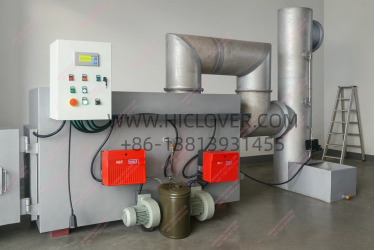
Two-stage combustion design to minimize visible emissions in urban areas
-
Containerized and mobile options suitable for rapid deployment in Dakar, Thiès, or regional hubs
-
Scalable capacity range, allowing projects to start small and expand
-
Simple operation and maintenance, important for long-term donor-funded facilities
HICLOVER reference links (3–5 core keywords)
-
Containerized Mobile Incinerators
https://www.hiclover.com/containerized-mobile-incinerators/ -
Double Combustion Chamber Containerized Mobile Incinerator
https://www.hiclover.com/double-combustion-chamber-containerized-mobile-incinerator-2/ -
Containerized Hospital Waste Incinerator CA100
https://www.hiclover.com/containerized-type-pre-assembled-mobile-hospital-waste-incinerator-model-ca100/ -
Medical Waste Incinerator TS Series
https://www.hiclover.com/backup/hiclover-ts-model-incinerator-2/
7. A Senegal-specific theme to highlight
Theme: “Standardized national rollout model”
A common and effective approach in Senegal is:
-
Pilot installation in Dakar (training + SOP validation)
-
Replication in Thiès and Saint-Louis using the same specification
-
Expansion to Kaolack and Ziguinchor with shared spares and training logic
This model:
-
Matches UN and NGO implementation patterns
-
Reduces operational risk
-
Simplifies audits and reporting
8. Buyer checklist for Senegal projects
-
Waste type definition: infectious, sharps, laboratory, pharmaceutical
-
Daily and peak volumes (urban hospitals vs regional clinics)
-
Site conditions: space, chimney routing, fuel logistics
-
Operator training plan
-
Documentation and compliance narrative aligned with UN/NGO requirements
Conclusion
Senegal, led by Dakar and supported by cities such as Thiès, Saint-Louis, Kaolack, and Ziguinchor, represents a structured and institution-driven incinerator market. Demand is strongest in healthcare and institutional waste, shaped by urban pressure and the strong influence of UN agencies and international partners. In this environment, two-stage, reliable, and deployment-friendly incinerators—rather than oversized municipal burners—are the most practical and sustainable solution.
Résumé en français
Le Sénégal, avec Dakar comme centre principal et des villes clés telles que Thiès, Saint-Louis, Kaolack et Ziguinchor, présente un marché des incinérateurs axé sur les déchets médicaux et institutionnels. La pression urbaine, l’implication des agences des Nations Unies et des ONG, ainsi que les exigences de conformité favorisent des solutions robustes, à double chambre de combustion, faciles à déployer et à exploiter sur le long terme.
2025-12-12/10:14:10
|
Incinerator Items/Model |
HICLOVER TS100(PLC)
|
|
Burn Rate (Average) |
100kg/hour |
|
Feed Capacity(Average) |
150kg/feeding |
|
Control Mode |
PLC Automatic |
|
Intelligent Sensor |
Continuously Feeding with Worker HICLOVER |
|
High Temperature Retention(HTR) |
Yes (Adjustable) |
|
Intelligent Save Fuel Function |
Yes |
|
Primary Combustion Chamber |
1200Liters(1.2m3) |
|
Internal Dimensions |
120x100x100cm |
|
Secondary Chamber |
600L |
|
Smoke Filter Chamber |
Yes |
|
Feed Mode |
Manual |
|
Burner Type |
Italy Brand |
|
Temperature Monitor |
Yes |
|
Temperature Thermometer |
Corundum Probe Tube, 1400℃Rate. |
|
Temperature HICLOVER |
Yes |
|
Automatic Cooling |
Yes |
|
Automatic False Alarm |
Yes |
|
Automatic HICLOVER Operator(APO) |
Yes |
|
Time Setting |
Yes |
|
Progress Display Bar |
3.7 in” LCD Screen |
|
Oil Tank |
200L |
|
Chimney Type |
Stainless Steel 304 |
|
1st. Chamber Temperature |
800℃–1000℃ |
|
2nd. Chamber Temperature |
1000℃-1300℃ |
|
Residency Time |
2.0 Sec. |
|
Gross Weight |
7000kg |
|
External Dimensions |
270x170x190cm(Incinerator Main Body) |
|
Burner operation |
Automatic On/Off |
|
Dry Scrubber |
Optional |
|
Wet Scrubber |
Optional |
|
Top Loading Door |
Optional |
|
Asbestos Mercury Material |
None |
|
Heat Heart Technology(HHT) |
Optional |
|
Dual Fuel Type(Oil&Gas) |
Optional |
|
Dual Control Mode(Manual/Automatic) |
Optional |
|
Temperature Record |
Optional |
|
Enhanced Temperature Thermometer |
Optional |
|
Incinerator Operator PPE Kits |
Optional |
|
Backup Spare Parts Kits |
Optional |
|
Mobile Type |
Optional:Containerized/Trailer/Sledge Optional |